


Plus: Could drivers under 21 go interstate? | Truck order slowdown

It may seem counterintuitive to refuse loads during a shipper's market. But could the strategy actually be what separates the surviving and thriving fleets from the ones that go under?
Plus, a look at driver recruitment challenges across the country and one fleet's strategy using virtual environments to boost safety on the roads.
But first, check out this short video that crunches the numbers to gross nearly $2.50 per mile.

⬇️ $3.607
AVG. COST OF DIESEL PER GALLON IN U.S. AS OF 12/15, DOWN -0.058¢
Source: U.S. Energy Information Administration

English enforcement. Here's a deep dive into the varying perspectives and effects of English proficiency enforcement. One eye-opening stat: 400,000 drivers could leave the industry.
Same but different. This article looks at five ways truck driver recruitment differs in Midwestern states vs. the coasts—and what's the same no matter which state you're in.
Save the date. An upcoming webcast will cover the state of the freight economy and rate forecasts for trucking, along with other freight modes.
'Tis the season. Some quick tips and reminders of how to stay safe on the road during winter weather.

The power of saying 'no' in trucking
Small carriers often lack the financial luxuries afforded to large fleets—like the ability to undercut lanes and gain it back on volume, or sustain temporary losses while waiting for the market to turn. Because of this dynamic, small carriers often say yes to every load, desperate to keep customers and the wheels turning, writes Rob Carpenter of Trucksafe Consulting.
The problem: "That desperation perpetuates the race to the bottom," Carpenter says. He notes that instead, carriers should refuse to haul loads that don't cover their minimum operating costs. The carriers that survive tough times are on top of their finances, know their break-even points and understand how to manage costs.
Why this matters: It seems every week, another fleet files for bankruptcy. The freight market, no doubt, is tough, but the right management strategy—one that focuses not just on the present but on long-term finances and future recovery—could help even the smallest carriers survive. (FreightWaves)

ACTION PLAN: State trucking associations release plan to battle fraud
BORDER CHANGE: Cross-border freight shrinks amid tariffs, visa changes
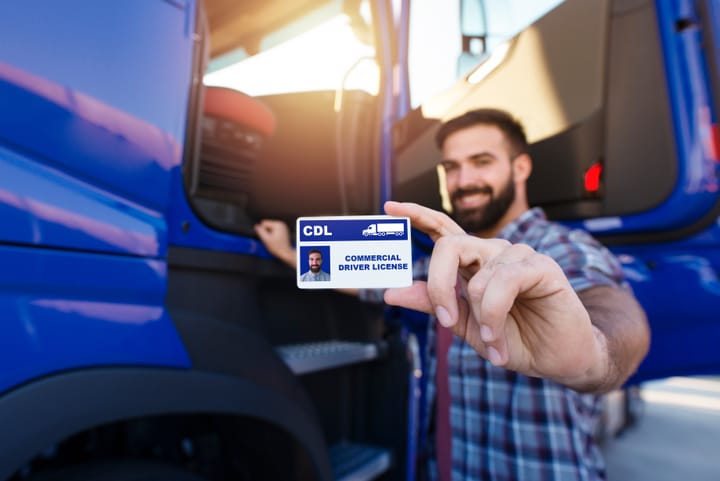
YOUNG TRUCKERS: Bill seeks to allow drivers under 21 to cross state lines within 150 miles of home base
NEW MODELS: Kenworth, Peterbilt launch medium-duty electric trucks
TRUCK V. TRAIN: Trucking company sues Union Pacific over fatal crash
LEADER CHANGE: Ryder CEO to retire, COO to take top spot

"I think the biggest misconception that I hear from a lot of drivers is, I'm just an owner op. I'm one guy. I can't make an impact in this. But you can."- Jacob Kirkman, Inland Kenworth
Kirkman discusses the big difference truck drivers can make in spotting and stopping human trafficking. His dealership, Inland Kenworth, puts a sticker with a hotline number on every truck it sells. Plus, they've partnered with TAT (formerly Truckers Against Trafficking) to train employees and customers on the signs of potential exploitation. (CCJ Digital)

Truck order slowdown could constrain capacity in '26
As order books open up for 2026, Class 8 truck orders are down 36%—the result of a sluggish freight market and trucking companies putting off big investments as economic uncertainty lingers. The order slowdown could come back to affect the market in 2026 or 2027, creating capacity constraints related to equipment.
Why this matters: Driver availability is typically what, well, drives capacity constraints. But with weak truck orders, it may be equipment that is shrinking supply. The freight market will need both a reduction in capacity and an uptick in demand to rebalance and recover. (Trucks, Parts, Service)

Trucking leader builds driver training simulation tech
Dylan West, who works in the safety department at Key Oil, has developed a simulator that helps train both new hires and veteran drivers. The program uses machine vision and AI-generated traffic, while also drawing in real-life telematics data and in-cab camera info.
Why this matters: West's innovation is all about safety—using the data and technology fleets already have to build something that enhances safety and driver training. It's one example of the many ways tech is transforming trucking and helping drivers, not replacing them. (Heavy Duty Trucking)

Thanks for reading today's edition! You can reach the newsletter team at editor@theinsidelane.co. We enjoy hearing from you.
Interested in advertising? Email us at newslettersales@mvfglobal.com
The Inside Lane is curated and written by Shefali Kapadia and edited by Bianca Prieto.

Comments ()