


From AI adoption to compliance crackdowns, experts share lessons and predictions for 2026

Between changing DOT policies, supply chain fraud, economic uncertainty and a freight market that just won’t budge, trucking had another tough year. But industry experts have still managed to find the bright spots, pointing out facets of trucking that have improved and are on the right path heading into 2026.
Here, these experts share their thoughts on 2025, their predictions for 2026 and tips for small business trucking firms to survive and thrive in the new year. – Shefali Kapadia
The answers below have been edited for brevity.




Looking back at this year, what’s one positive change you saw happen in trucking?
Hildebrand: Especially in the back half of the year, federal regulators got serious about chameleon carriers, ELD manipulation and general bad actors. We can debate the methods being used and their effectiveness, but the big picture in my mind is to ensure that only carriers who are playing by the rules are able to play the game.
Seeing the number of carriers going out of business, especially those that have been in operation for decades, is extremely sad. Your heart has to go out to all the drivers and other employees affected. If the industry is able to weed out those that circumvent regulations, which ultimately drives rates down and pushes legitimate carriers out of business, then it can only be a positive development for trucking.
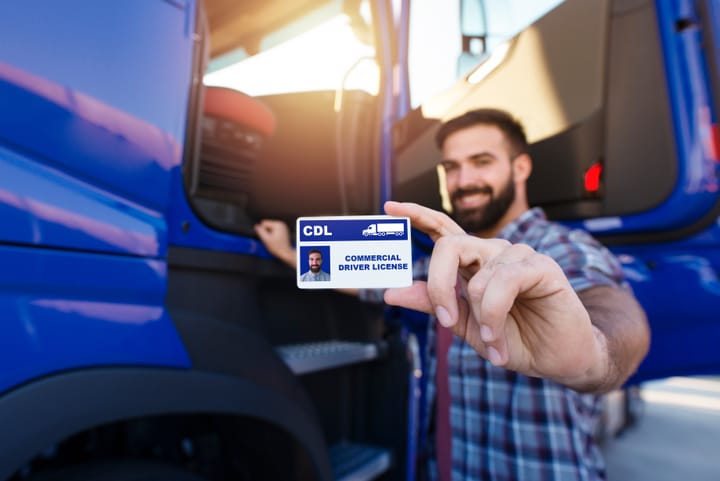
Pace: The Department of Transportation moved decisively to clean up the CDL training system. That crackdown has helped prevent the proliferation of unsafe “CDL mills” and reinforced the message that only properly trained drivers should get behind the wheel. It’s a welcome shift that raises the bar of quality of new hires, improves industry credibility and reduces liability risks down the line.
Hedrick: There continue to be opportunities and positive advances for women in the trucking industry. The Women in Trucking Association conducts the WIT Index, which is the industry barometer benchmarking and measuring the percentage of women in key roles in the North American trucking industry. According to the 2024-25 WIT Index, women comprise 34.5% of company leaders (defined as individuals who manage others) and 28% of C-suite executives. Another 38.5% of women comprise safety roles, and 38.5% are in dispatcher positions. In addition, 9.5% of professional truck drivers are women.
Smith: I noticed more customers becoming patient and realistic with delivery windows this year. After a few tough years where everyone wanted everything faster, people started giving proper time for routes again. That change really eased a lot of tension in our workday because we weren’t being pushed to rush through traffic or cut corners just to meet their expectations that didn’t match real conditions. It brought the pace back to something we can actually manage.
Aman: One of the most positive shifts this year was the industry moving from AI experimentation to AI execution. We’re seeing real adoption of agentic systems that can book loads, manage dispatch and monitor freight autonomously, which is a meaningful step toward more resilient and scalable trucking operations.
What’s one industry challenge you’d like to see improved or resolved in 2026?
Aman: Freight fraud is one of the biggest challenges facing the industry today and includes everything from identity theft and double brokering to bad actors exploiting manual processes. By 2026, I’d like to see the industry move toward automated, AI-driven compliance and verification as a baseline. Agentic systems that continuously verify carriers, enforce SOPs and monitor exceptions in real time are essential to restoring trust and reducing fraud at scale.
Pleeth: The fragmentation of software. Fleets often use up to 20 different pieces of software, for example, routing tools, dispatch software, messaging, invoice, integrations and customer service, and they all don’t speak to each other. Every extra system creates manual work, spreadsheets, mistakes, delays and cost. In 2026, the industry needs platforms that unify everything.
Hildebrand: This isn’t within our control at all, but the macroeconomic environment we’ve been in the last few years has been particularly problematic for the trucking industry. Between inflation, elevated interest rates, a sluggish housing market and depressed domestic manufacturing, there’s simply less freight to move. Additionally, tariffs introduced this year have created uncertainty, particularly within the business community, that compounds with the issues mentioned above. If we can start to unwind some of these headwinds, I believe conditions could improve next year, leading to more demand for truckload capacity.
Pace: While the clean up of non-compliant CDL training schools is long overdue, it does simultaneously tighten an already strained driver pipeline. With fewer training options and stricter enforcement, fewer drivers are entering the market. Some already licensed drivers are increasingly being sidelined due to stricter enforcement of English proficiency requirements, with more road side enforcements and immediate out-of-service orders—a problem in an industry that attracts many recent immigrants. If legislators don’t find a way to expand compliant training capacity or improve retention, we will see driver shortages and higher labor costs.
Smith: I’d like to see better support for truck maintenance staffing. A lot of small shops are struggling to keep enough good mechanics, and when you finally get a truck in for service, you sometimes end up waiting because the shop is overrun. Having a stronger pipeline of trained mechanics would make a big difference for our entire industry because most of us depend on those shops to keep moving.
Hedrick: There is a significant shortage of effective large-truck parking spaces, and the economic cost to the industry is clearly a suboptimal situation. Although truckers usually are successful in finding a parking space, those spaces are seldom the “right” spaces for the trip cycle at hand—and also are not necessarily optimal for the safety of women professional truck drivers. Poor choices in parking can lead to $200 or more in additional costs per load, totaling more than $100 billion in increased costs. Some companies are building more parking spaces (at a slow and expensive pace) or providing reservations for legal parking spaces. Others are allocating more legal parking spaces at such locations as diners, stores and carrier operating centers. Still others are improving decision-making among carriers and shippers about the importance of using the right legal parking spaces.
Which emerging trucking trend excites you most, and why?
Pleeth: The most exciting trend is AI that actually removes work rather than adding pointless dashboards. 2026 will be when Agentic AI schedules drivers, creates routes, predicts exceptions, reconciles invoices and flags issues. This is going to be a game-changer in trucking. This operating layer will be doing the heavy lifting and making everything run smoother and more efficiently.
Hildebrand: The general trend towards innovation and increasing technological know-how in the trucking industry as a whole is exciting to me. There are so many tools available for carriers to grow in their knowledge of industry developments, scrutinize their network, boost load planning productivity or streamline their RFP and pricing processes. It seems that there is almost no limit to how carriers can go about improving their operation. The more knowledge that carriers have, the more disciplined we can be with developing our networks and pricing our freight. This, in turn, should raise rates for all carriers rather than the typical down-market race to the bottom.
Smith: I’ve liked seeing more attention on preventive maintenance systems. There are systems now that give early warnings for minute issues long before they turn into breakdowns with things like irregular battery voltage, misfires, or temperature swings in the transmission. For a small fleet like ours, that kind of early signal is valuable because it lets us take care of a repair on our terms instead of being caught off guard.
What do you think small- to medium-sized fleets need to survive and grow in 2026?
Smith: More reasonable access to working capital. Most small fleets grow slowly because every upgrade, like a truck, insurance, fuel reserves or even maintenance, can all hit at once. Having financing options that are too rigid or too expensive makes owners hesitate to expand even if the demand is there. Having lending options that understand seasonal swings and cash flow gaps would allow small fleets to take on opportunities that are already within reach.
Hildebrand: Especially in this environment, knowing your costs is incredibly important. Being aware of what your cost per mile is, as well as your breakeven mileage per truck, will guide your network development and pricing strategy and help ensure that you don’t bring on freight that will be a net drag on your profitability.
Hedrick: The baseline for fleet survival used to be “keep trucks rolling.” In 2026, that’s necessary but not sufficient. Smaller carriers that want to thrive must combine smart tech, flexible finance, happier drivers and an operations-first approach to maintenance and partnerships. The must-haves for fleets that don’t have a giant back office include: investments in telematics and data-first operations; predictive maintenance and uptime discipline; address the driver problem with modernized recruiting and retention investments and initiatives; adopt flexible financing and asset strategies; and keep an eye on automation and AI.
Pleeth: They need simplicity—a single system that reduces the number of routes, cuts empty miles, automates back office tasks and improves delivery success. Cash flow is king, so anything that can reduce costs and eliminate errors will have an immediate impact. Small fleets need technology that removes manual work and enables them to take on enterprise contracts without adding overhead or complexity.
Aman: Small and mid-sized fleets will need access to automation that was previously only available to large enterprises. AI-driven operations can help them reduce paperwork, speed up dispatch, improve compliance and get paid faster. In an industry with thin margins, autonomous software agents will be one of the most important tools for SMB fleets to stay competitive and grow.
Pace: Fleet owners need to focus on compliance, new technology and driver retention. In practice, this means using verified training providers, leveraging digital tools such as TMS and AI-driven dispatch and building a stable driver culture. Reliability and operational discipline will matter more than fleet size or having the lowest-cost bids. For a small- to medium-sized company like WTL, adapting fast rather than expanding fast will be the real key to growth.

Thanks for reading today's edition! You can reach the newsletter team at editor@theinsidelane.co. We enjoy hearing from you.
Interested in advertising? Email us at newslettersales@mvfglobal.com
The Inside Lane is curated and written by Shefali Kapadia and edited by Bianca Prieto.

Comments ()